ESP32 – the few-euro chip that solved the most in my house

ESP32 is a tiny board with WiFi and Bluetooth for a few euros. With ESPHome you flash it without programming and it shows up in Home Assistant on its own. In my house it runs more than ten projects – from local Tesla control through batteries and the gas boiler to a cooker hood that switches on from the hob. At the end, vote for which project I should write a guide for first.
For a long time I avoided ESP32. I thought it was for people who can code, own an oscilloscope and understand processor registers. I wanted a smart home, not a second job.
Then, about two years ago, I needed to get my Deye inverter into Home Assistant. Ironically, that was a pretty hard first project – talking to the inverter directly over UART, a serial line. And I found out that with help from the internet (and later AI) it is not rocket science.
Since then, whenever I think about a new project, the first question is: can I use an ESP for this?
What is ESP32
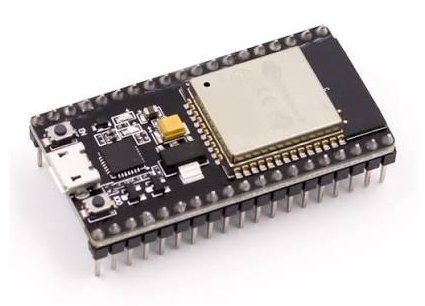
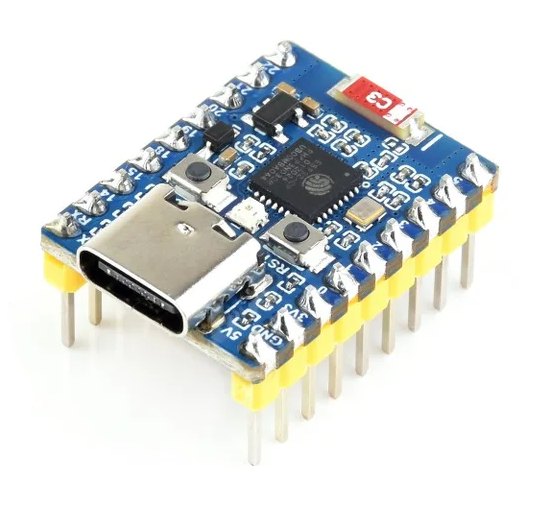
ESP32 is a small chip (and the board around it) made by the Chinese company Espressif. It has:
- WiFi and Bluetooth – it joins your network on its own, no hub and no cloud,
- inputs and outputs (GPIO) – connect sensors, relays, LED strips, buttons,
- serial buses (UART, I2C, SPI) – it can "talk" to an inverter, a BMS, an air conditioner or a display.
A board costs a few euros and fits into a wall box behind a switch.
The first flash goes over a USB cable from your browser or from the ESPHome add-on in HA. Every change after that goes over the air via WiFi (OTA) – the ESP can sit inside a wall and you never have to take it out.
Which ESP to buy
There are many variants and it is confusing at first. For home projects you only need to know these:
| Chip | What is different | Good for |
|---|---|---|
| ESP32 (classic, DevKit) | 2 cores, WiFi + Bluetooth, lots of pins | the all-rounder, Bluetooth proxy, several sensors at once |
| ESP32-C3 | 1 core, small, cheap, USB-C | simple sensors and relays when space is tight |
| ESP32-S3 | more memory and power, USB | displays, cameras, heavier projects |
| ESP32-C6 | WiFi 6, also does Zigbee and Thread | when the device should live in a Zigbee network |
What runs on ESP in my house today
These are the things running right now – every day, without me touching them:
- Tesla in Home Assistant, locally – controlling the car over Bluetooth straight from the house, without the Tesla cloud.
- Garden relays – 4- and 8-channel boards for everything in the garden that switches on and off.
- Gas boiler – controlling the boiler and measuring temperatures in the hot water tank and on the pipes from the boiler.
- Room temperatures over LAN cables – DS18B20 temperature sensors (1-Wire bus) in the rooms connected to the ESP through network (LAN) cables.
- Wall tablet backlight – an addressable LED strip around the display that shows the state of the house by colour, visible from across the room.
- Samsung air conditioner – an older unit the manufacturer stopped supporting. With ESP it works normally in HA.
- 3 × JK BMS over Bluetooth – reading data from all three BMS of my batteries.
- Three BMS and a SmartShunt into the Deye inverter – the ESP presents itself as one battery, feeds the inverter the exact state of charge from the SmartShunt and reads three JK BMS over Bluetooth to smoothly lower the charge current. Guide with wiring and code.
- A "dumb" cooker hood controlled from the hob (Hob2Hood) – the hob sends an infrared signal meant for the hood, the ESP catches it and switches the hood via relays.
- Water and gas metering – on an ESP32-C6 that sits directly in the Zigbee network.
- Garden watering and pool filtration.
And projects that ran on ESP in the past:
- water level in the rainwater barrel,
- controlling the TV over HDMI (HDMI-CEC),
- a standalone Bluetooth proxy for Home Assistant,
- and lots of other experiments.
What I had to learn
The beginning was harder. Not because it is complicated, but because I did not know what I did not know. I wish I had known these from day one:
- How the ESP behaves after a power cut. After a restart the ESP starts in the state you set (
restore_mode). For relays on a boiler or watering this matters – you do not want something left on after an outage. - How much fits on it at once. WiFi and Bluetooth share one radio and memory is limited. A Bluetooth proxy, several BMS and a display on one small board is already pushing it.
- What happens when WiFi or Home Assistant goes down. Important logic (a safety shut-off, for example) is better placed directly in the ESP, not in an HA automation. Then the ESP keeps working even while you restart HA.
- Power supply. Most "mysterious" restarts and dropouts are a bad power supply or a long thin cable, not a bug in the code.
You need to be able to connect wires, solder a bit and understand basic electricity. But it is a craft you can learn – and today the community and AI help you with every step.
Which guide do you want first?
I will gradually add guides for my projects here – with exact wiring, ESPHome YAML and everything that went wrong along the way. Videos will follow later. Vote for the one you are most interested in – I will pick it first.
If you have an idea for something ESP could solve, or want me to look at your project, get in touch.