Living with an EV after 60,000 km – what works and what doesn't

I've driven an EV since September 2023 and put over 60,000 km on it. If you can charge at home, it's made for you. Range doesn't matter – consumption and charging speed do. My long-term average is 16.9 kWh/100 km. Winter takes roughly a third of the range and public charging can be a pain. I wouldn't go back to petrol.
I won't lie, I liked electric cars from the start. Not because they're "green", but because the principle is far simpler than a combustion engine. And because I can charge the car from my own solar panels – which gives me a sense of independence.
So what's it like in reality?
It started with a plug-in hybrid
My road to an EV began with a Ford Kuga plug-in hybrid – lightly used, imported from Germany. The silence and instant throttle response won me over right away. Great for everyday driving. And the 2.5-litre engine had no trouble even with a flat battery.
On longer trips, though, I started wondering what a pure EV would be like. Even with the plug-in we stopped more often than refuelling required. The 700 km range wasn't the limit – the limit was how long we were willing to sit in the car without a break.
Tesla Model Y RWD
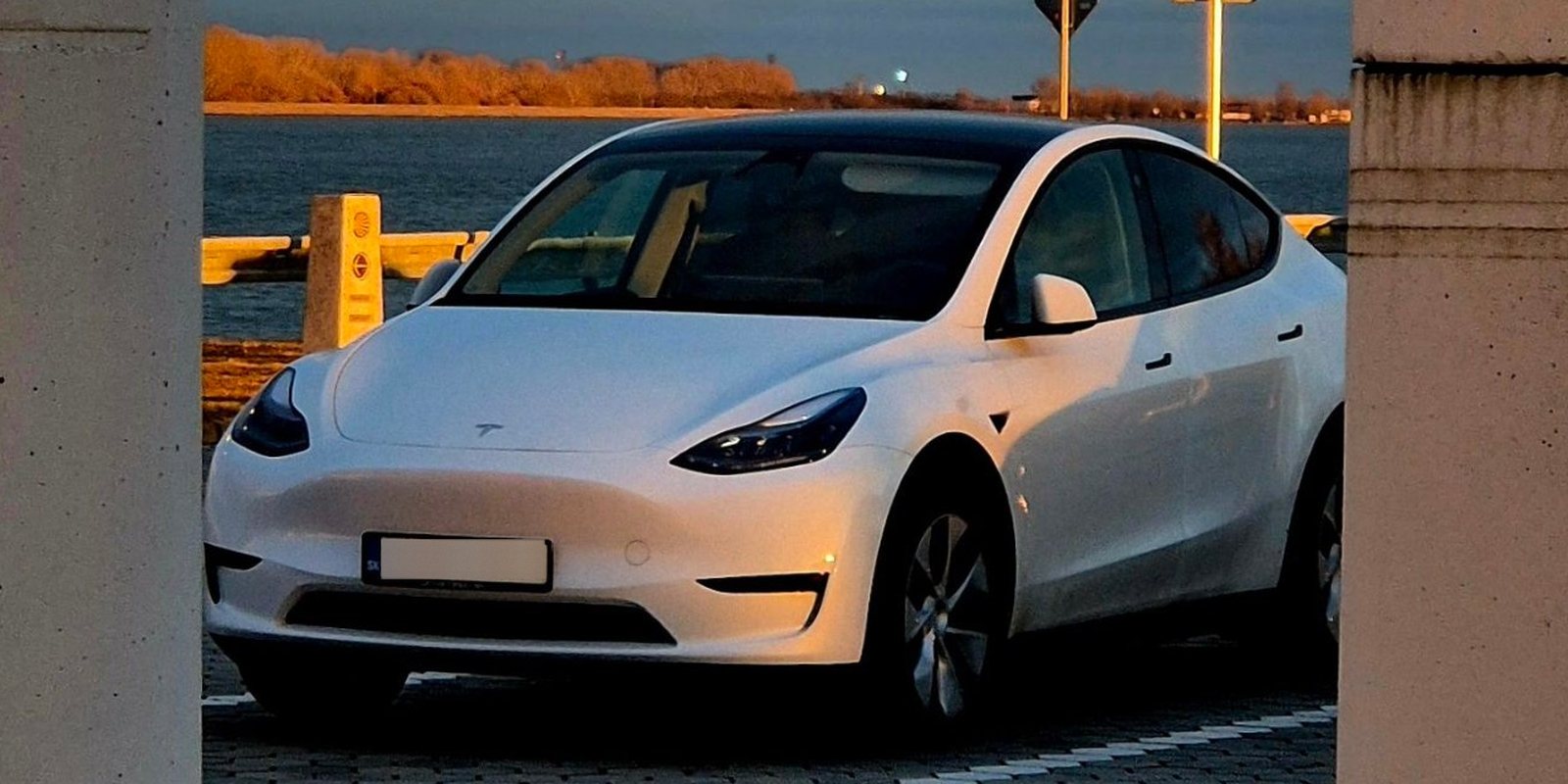
It didn't take long before I decided to go fully electric. Price to performance gave a clear green light to the Tesla Model Y RWD. In September 2023 I sat behind its wheel for the first time. It was the first brand-new car of my life – until then I had only ever bought used ones.
I wish everyone could feel that first drive. Instant response, power, silence and comfort. All of that adds up to a much calmer way of driving.
Today the car has over 60,000 km on the clock. I won't review the car itself, but life with an EV as such. As for the car: I'd buy it again without hesitation.
Charging at home is what matters most
If you live in a house or have a garage with power, an EV is made for you. A fully charged, pre-heated (or pre-cooled) car every morning is a benefit you only truly appreciate over time.
Home charging is the killer feature. Priceless, whatever electricity costs.
I'm not saying an EV makes no sense if you live in a flat. But public charging isn't exactly fun. Just look at EV owners' groups – who is blocking chargers and how, which chargers are down right now. Not to mention what that kind of charging costs.
Range doesn't matter. Consumption and charging speed do
At least for us. Sitting in the car for 6 hours without a break? No thanks. I never did that with a petrol car either.
So when I stop for a quick toilet break every couple of hours, I want the car to charge in those few minutes. Since I bought it, my Tesla has averaged 16.9 kWh/100 km – summer and winter, town and motorway combined. When choosing an EV, look mainly at how much it uses and how fast it charges – not the range figure in the brochure.
Rear-wheel drive? My fear was unfounded
This was what worried me most. I had only ever driven front-wheel-drive cars and associated rear-wheel drive with old BMWs or Ladas that were written off after the first snow.
The opposite turned out to be true. So far I haven't had a single problem – and where front-wheel-drive cars got stuck, I kept going.
Winter eats range
Yes, winter is a range killer. Expect that if you do 300 km on the motorway in summer, in winter it'll be a bit over 200 km. That's still a weakness of EVs which – I believe – progress will solve.
Public charging – a card game
Charging on public chargers means registration, an app or the provider's card. And since there are many providers, you end up with a whole deck of cards. 🙂
And then the waiting. It's rare, but it happens and it's not a nice feeling. On our way back from Croatia we arrived with a flat battery at a charging park where only 6 of 18 chargers worked and there were 6 cars queuing ahead of us. In the end we waited just under half an hour.
Infrastructure will be key to making the switch to EVs manageable at scale.
What about the environment?
EVs are zero-emission – with one footnote: locally zero-emission. Otherwise, in my view, it's six of one and half a dozen of the other.
But if I had to choose between being locked in a garage with a running EV or a petrol car, the choice is obvious. Even though I like the smell of petrol, I pick the EV. 🙂
So yes – for a city where people live, EVs make a big difference to air quality. Globally, they're not that much of a miracle.
Driving: try it yourself
If you've never driven an EV, try one yourself. Today almost any EV gives you a driving experience that beats an ordinary petrol car. Instant response, acceleration, one-pedal driving and the silence are magic.
If someone says they miss the engine sound – then I don't understand why premium combustion cars try so hard to suppress it.
What would make me go back to petrol?
I've thought about it a lot. Apart from being given such a car? Maybe money, if I couldn't afford an EV. And then infrastructure failing so you couldn't charge on the road.
But that can happen with petrol too…
Summary
- With home charging, an EV is simply a better everyday car.
- Don't worry about range – look at consumption and charging speed.
- In winter, expect roughly a third less range.
- Public charging works, but be ready for apps, cards and the occasional wait.
- Rear-wheel drive is no problem in winter.